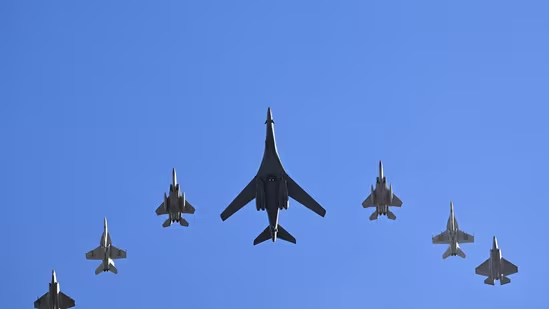
The United States has intensified its military presence in the Middle East as tensions with Iran rise sharply. Over the past few days, the Pentagon moved advanced stealth fighters, including the F-35 Lightning II and the F-22 Raptor, to strategic bases across the region. Officials say this marks Washington’s largest military buildup there since the 2003 Iraq invasion. Reports from The Wall Street Journal and Axios indicate that US commanders are preparing for multiple scenarios, including sustained air operations if diplomacy fails.
US Strengthens Naval Strike Power Near Iran
The US Navy has reinforced its presence by deploying the aircraft carrier USS Gerald R. Ford to the region. It joins the USS Abraham Lincoln, which already operates within striking distance of Iran’s coastline. Both carriers carry advanced strike fighters and electronic warfare aircraft. Military planners have also positioned missile defense systems and airborne command units. This combination gives the US the ability to launch rapid strikes or conduct a prolonged air campaign if required.
Trump Reviews Military Strike Options
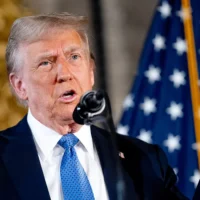
US President Donald Trump has reviewed several military options, according to officials familiar with the briefings. Advisors presented plans that range from targeted strikes on nuclear and missile sites to broader attacks aimed at weakening Iran’s leadership and regional proxies. Some proposals outline a campaign lasting several weeks. However, Trump has not made a final decision. The White House continues to evaluate both military and diplomatic paths.
Nuclear Tensions and Diplomatic Talks Continue
The current standoff centers on Iran’s nuclear program and regional influence. Protests inside Iran over economic conditions have further complicated the situation. Meanwhile, US and Iranian representatives met in Geneva to discuss uranium enrichment limits. White House Press Secretary Karoline Leavitt said the talks showed limited progress but acknowledged major disagreements remain.
As military assets move into place, Washington keeps pressure on Tehran while leaving room for negotiations. The coming days could determine whether the crisis escalates into conflict or shifts toward diplomacy.
The United States has launched its largest military buildup in the Middle East since the 2003 Iraq invasion, significantly escalating tensions with Iran. Over the past few days, advanced stealth fighter jets including the F-35 Lightning II and F-22 Raptor have been deployed to key regional bases. According to reports by The Wall Street Journal and Axios, the Pentagon has also moved crucial command-and-control aircraft and missile defense systems, signaling preparations for a possible large-scale military operation. The deployment comes amid rising friction over Tehran’s nuclear program and internal unrest within the country.
Massive Naval Firepower Moves Closer to Iran
In addition to the advanced fighter jets, the US has dispatched the aircraft carrier USS Gerald R. Ford to the region. The carrier joins the already deployed USS Abraham Lincoln, forming a formidable naval presence within operational range of Iran’s coastline. The USS Gerald R. Ford is equipped with attack aircraft and electronic-warfare planes capable of supporting sustained air campaigns. Defense analysts describe this as the most significant concentration of American air and naval power in the region in over two decades, providing Washington with the capability to conduct prolonged operations rather than limited, targeted strikes.
Trump Briefed on Military Options
US President Donald Trump has reportedly received multiple classified briefings outlining possible strike options against Iran. According to officials cited by The Wall Street Journal, these plans range from targeted airstrikes on nuclear and ballistic missile facilities to broader campaigns aimed at crippling the Iranian regime and its regional proxies. Any potential operation, sources suggest, could unfold over several weeks, resembling a full-scale air war rather than a one-time strike. However, officials maintain that no final decision has been made.
Diplomacy Continues Despite Escalation
Even as military assets move into place, diplomatic efforts remain underway. Representatives from the United States and Iran recently held discussions in Geneva focused on uranium enrichment and nuclear safeguards. White House Press Secretary Karoline Leavitt described the talks as showing “a little bit of progress,” though she admitted both sides remain far apart on critical issues. With tensions mounting, the coming days may prove decisive in determining whether the crisis moves toward negotiation or conflict.