Risk Gaps Exposed in Himalayan Infrastructure Planning
A new report by the National Disaster Management Authority (NDMA) has flagged the 2021 Chamoli avalanche and the 2024 Wayanad landslides as disasters that could have been prevented with stronger risk assessment and planning. In a compendium reviewing 10 major incidents, the authority pointed to systemic gaps in infrastructure strategy, environmental evaluation, and long-term disaster preparedness. The findings mark a rare and candid acknowledgment of lapses in project planning and risk mitigation.
The report noted that the 2021 Chamoli disaster, which destroyed two hydropower projects in Uttarakhand, exposed the limits of conventional engineering assessments in the fragile Himalayan ecosystem. Of the 204 people feared dead, only 77 deaths were officially confirmed, while 127 remain missing. The NDMA stressed that future projects in geologically unstable regions must adopt dynamic risk modelling that factors in climate change, seismic vulnerability, and compound hazard scenarios.
Silkyara Collapse and Missed Warning Signals
The compendium also examined the 2023 Silkyara tunnel collapse, stating that authorities overlooked multiple warning signs. Since construction began, the tunnel had recorded 21 documented collapse incidents of varying severity. According to the NDMA, these precedents revealed a pattern of geological underestimation and reactive risk management. Experts had repeatedly warned that large-scale infrastructure projects in the Himalayas exceeded the region’s ecological carrying capacity.
Wayanad Landslides Highlight Climate and Deforestation Impact
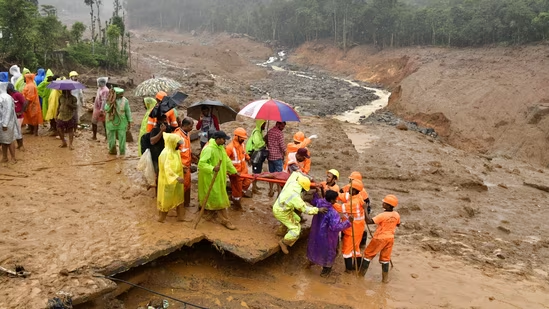
Turning to Kerala, the NDMA linked the 2024 Wayanad landslides to both climate change and human-driven environmental degradation. The disaster left 225 people confirmed dead, with 138 still missing. Preliminary assessments estimate that Wayanad lost up to 62% of its green cover between 1950 and 2018. The report noted that expanding tea plantations and unplanned development weakened natural slope stability and water retention systems.
Call for Proactive Risk Governance
Overall, the NDMA stressed that these disasters underline the urgent need for proactive planning, stricter environmental oversight, and community-level preparedness. By compiling lessons from natural hazards, industrial accidents, and infrastructure failures, the authority aims to guide future decision-making. The message is clear: without scientific risk evaluation and sustainable development practices, vulnerable regions will continue to face avoidable tragedies.