Madhav Gadgil Environmental Legacy in Grassroots Conservation
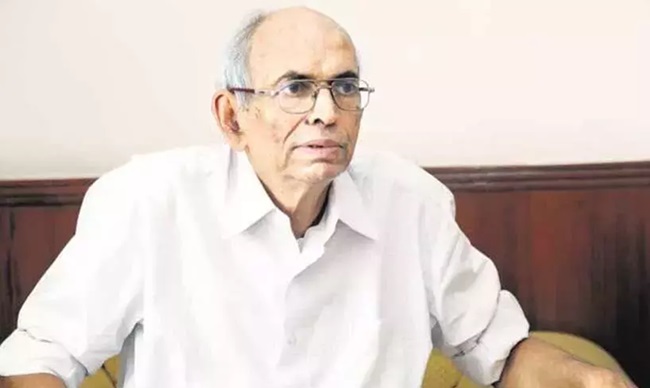
Veteran ecologist Madhav Gadgil passed away in Pune at the age of 83 after a brief illness. His son, Siddhartha Gadgil, confirmed the news. Known for his bottom-up approach to conservation, Gadgil shaped India’s environmental movement. His work connected science with local communities and influenced generations of environmentalists. Madhav Gadgil Environmental Legacy continues to inspire grassroots initiatives across India. He emphasized that protecting ecosystems must go hand-in-hand with supporting local livelihoods.
Western Ghats and Madhav Gadgil Environmental Legacy
Gadgil chaired the Western Ghats Ecology Expert Panel in 2011. The panel’s Gadgil Report recommended declaring 75% of the Western Ghats as environmentally sensitive. His warnings about infrastructure and industrial projects proved prescient after floods and landslides affected the region. Despite opposition from states, Gadgil’s vision emphasized protecting biodiversity while empowering local communities. This commitment forms a central part of his environmental legacy, influencing environmental debates and policy decisions even today.
Global Recognition for Madhav Gadgil Environmental Legacy
A “people’s scientist,” Gadgil worked with tribal and farming communities to conserve forests, wetlands, and ecosystems. He authored seven books and over 225 scientific papers. In 2024, the United Nations Environment Programme named him one of six “Champions of the Earth,” highlighting his lifelong dedication. Gadgil also contributed to India’s Biological Diversity Act. His research and advocacy strengthened policies and programs that benefit both nature and people, solidifying the Madhav Gadgil Environmental Legacy.
A Life Dedicated to Nature and Science
Born in Pune in 1942, Gadgil developed an early love for nature through his birdwatcher father. He studied in Pune, Mumbai, and Harvard University, earning a doctorate in mathematical ecology. He spent 31 years at the Indian Institute of Science, Bengaluru, founding the Centre for Ecological Sciences. Gadgil’s work across ecology, anthropology, and public policy reflects the depth of his environmental legacy. He is survived by his family; his wife, monsoon scientist Sulochana Gadgil, passed away last year. His teachings and writings will continue to inspire scientists, policymakers, and conservationists for decades to come.
Madhav Gadgil Environmental Legacy in Grassroots Conservation
Veteran ecologist Madhav Gadgil passed away in Pune at the age of 83 after a brief illness. His son, Siddhartha Gadgil, confirmed the news. Known for his bottom-up approach to conservation, Gadgil shaped India’s environmental movement. His work connected science with local communities and influenced generations of environmentalists. Madhav Gadgil Environmental Legacy continues to inspire grassroots initiatives across India.
Western Ghats and Madhav Gadgil Environmental Legacy
Gadgil chaired the Western Ghats Ecology Expert Panel in 2011. The panel’s Gadgil Report recommended declaring 75% of the Western Ghats as environmentally sensitive. His warnings about infrastructure and industrial projects proved prescient after floods and landslides affected the region. Despite opposition from states, Gadgil’s vision emphasized protecting biodiversity while empowering local communities. This aspect of his work forms a crucial part of his environmental legacy.
Global Recognition for Madhav Gadgil Environmental Legacy
A “people’s scientist,” Gadgil worked with tribal and farming communities to conserve forests, wetlands, and ecosystems. He authored seven books and over 225 scientific papers. In 2024, the United Nations Environment Programme named him one of six “Champions of the Earth,” highlighting his lifelong commitment. Gadgil also contributed to India’s Biological Diversity Act, leaving behind a lasting Madhav Gadgil Environmental Legacy in policymaking and education.
A Life Dedicated to Nature and Science
Born in Pune in 1942, Gadgil developed an early love for nature through his birdwatcher father. He studied in Pune, Mumbai, and Harvard University, earning a doctorate in mathematical ecology. He spent 31 years at the Indian Institute of Science, Bengaluru, founding the Centre for Ecological Sciences. Gadgil’s work across ecology, anthropology, and public policy reflects the depth of his environmental legacy. He is survived by his family; his wife, monsoon scientist Sulochana Gadgil, passed away last year.