Seven Killed After Ranchi-Delhi Flight Goes Down
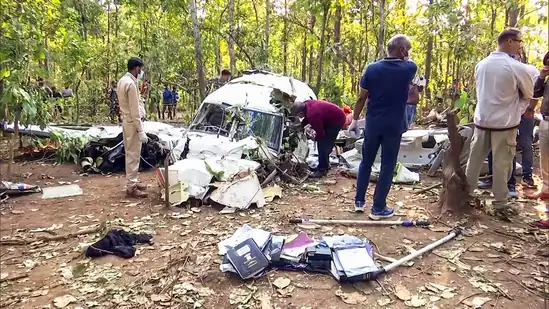
A Delhi-bound air ambulance crashed in Jharkhand’s Chatra district on February 23, killing all seven people on board. The aircraft departed from Birsa Munda Airport at 7:11 pm and was headed toward Indira Gandhi International Airport. However, shortly after take-off, the crew requested a weather deviation. Soon afterward, air traffic control lost both communication and radar contact. Subsequently, the aircraft crashed in a forested area near Simaria, prompting an immediate emergency response.
Aircraft Age and Technical Details Under Scrutiny
Officials confirmed that Redbird Airways operated the aircraft, a Beechcraft C90A King Air manufactured in 1987. At the time of the accident, it had logged approximately 6,610 airframe hours. Importantly, aviation experts emphasized that aircraft age alone does not determine safety. Instead, regular inspections and compliance with maintenance protocols play a decisive role. The aircraft ran on Pratt & Whitney PT6A-21 engines, which had accumulated nearly 2,900 hours on the left engine and 2,800 hours on the right. Moreover, both propellers had completed around 2,500 hours. Authorities had issued its latest Airworthiness Review Certificate in January this year, and it remained valid.
Victims and Crew Experience
The crash claimed the lives of 41-year-old patient Sanjay Kumar, along with a doctor, a paramedic, and two attendants. Additionally, pilot-in-command Vivek Vikash Bhagat and first officer Savrajdeep Singh were on board. Bhagat had logged around 1,400 flying hours, while Singh had approximately 450 hours. Therefore, investigators will likely assess crew coordination and flight decisions as part of the inquiry. At the time, the aircraft was conducting a medical evacuation mission.
No Black Box, Investigation Gains Momentum
Notably, the aircraft did not carry a cockpit voice recorder (CVR) or flight data recorder (FDR), as regulations did not mandate them when authorities certified the plane in 1987. Consequently, investigators must rely on maintenance records, ATC transcripts, and weather data. Meanwhile, the Directorate General of Civil Aviation (DGCA) has intensified its probe. Going forward, officials will analyze technical logs, engine performance data, and weather conditions to determine the precise cause of the crash.