Pressure Defines the India-Pakistan T20 Rivalry
India vs Pakistan at the T20 World Cup has never been a slow-burning rivalry. Instead, it unfolds in sharp bursts of tension, where a single over or delivery can decide the outcome. Every decision becomes magnified under pressure, turning routine moments into defining ones. Players like Suryakumar Yadav and Salman Ali Agha have often found themselves at the center of these high-stakes phases. What separates victory from defeat is not talent alone, but the ability to think clearly when the match begins to feel chaotic.
From Bowl-Out Drama to Last-Over Thrillers
The rivalry’s modern story began in 2007 with a dramatic bowl-out in Durban, where India held their nerve to prevail. Later that year, the final in Johannesburg showed how one over could define a lifetime, as India defended a narrow total. Over the years, similar patterns emerged. In 2012 and 2014, India won by keeping emotions in check and controlling the tempo. In 2016, they adapted better to difficult conditions. Each match reinforced the same lesson: India-Pakistan clashes rarely reward aggression without planning. They reward players who manage risk and timing under intense scrutiny.
Turning Points: Dubai, Melbourne, and New York
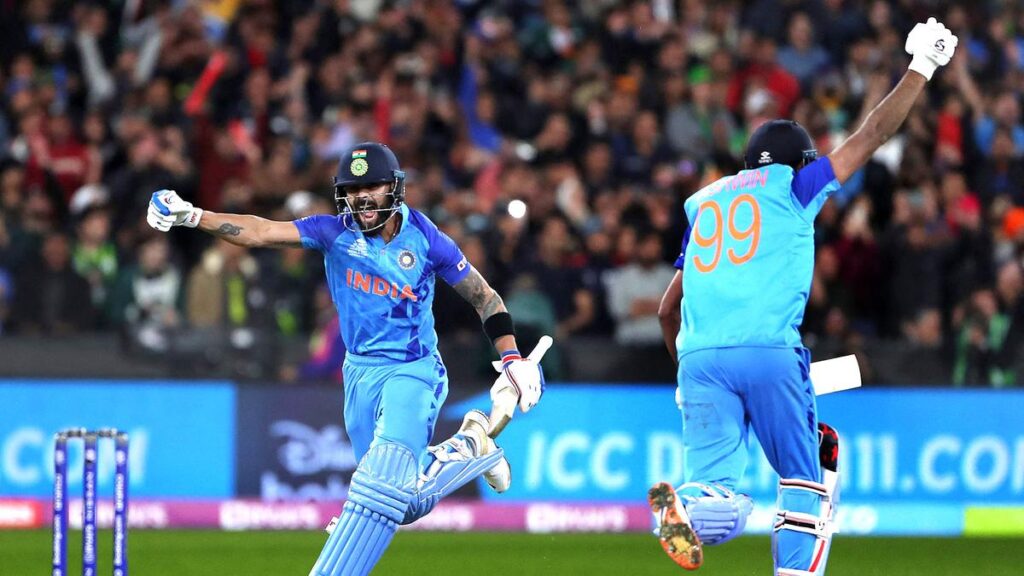
Some matches stand out as emotional turning points. In Dubai 2021, Pakistan broke their World Cup jinx with a flawless chase built on discipline. A year later in Melbourne, Virat Kohli produced one of the greatest T20 innings under pressure, rescuing India from near defeat. In New York 2024, India defended a modest 119 through tight bowling and sharp fielding. These games proved that even low-scoring or one-sided situations can swing suddenly if one team loses mental control. In this rivalry, momentum is fragile and confidence can shift within minutes.
The Real Battlefield: Winning the Pressure Phases
When the defining matches are viewed together, a clear pattern emerges. India vs Pakistan at the T20 World Cup is decided in pressure phases rather than on paper strength. These phases usually come in three forms: powerplay control, middle-over stability, and death-over clarity. Teams that manage the new ball well set the tone. Those who rotate strike in the middle overs avoid panic. And those who stay calm at the end make better decisions. Ultimately, this rivalry tests psychological strength more than raw skill. The team that stays composed when the game turns unpredictable is the one that usually walks away victorious.