Bilateral Trade Goals and Strategic Deals
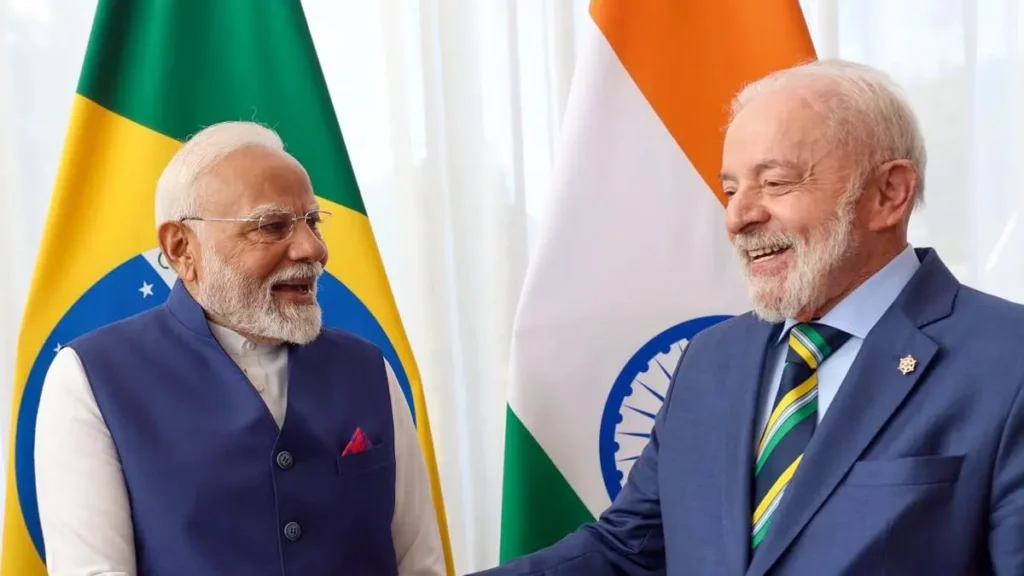
India and Brazil agreed to double their bilateral trade to $30 billion by 2030. The announcement followed talks between Prime Minister Narendra Modi and Brazil’s President Luiz Inacio Lula da Silva in New Delhi. They signed key agreements on rare earths, critical minerals, and the steel supply chain. The agreements aim to strengthen supply chains and reduce dependence on single-country sources. Both leaders also emphasized cooperation in defence, energy, healthcare, and digital infrastructure.
Rare Earths, Mining, and Renewable Energy Focus
The mineral agreements secure resources for technology, renewable energy, and industrial growth. Brazil holds large reserves of iron ore and other minerals vital for India’s steel sector. Modi called the rare earth pact a “major step” toward resilient supply chains. Lula highlighted India’s expertise in IT, AI, biotechnology, and space as drivers for new investments. Both leaders stressed renewable energy, green technology, and sustainable industrial cooperation.
Expanding Trade Agreements and Multilateral Ties
Modi and Lula discussed expanding the India-Mercosur preferential trade agreement (PTA). They also noted that the India-EU free trade deal could spur broader economic cooperation. Both leaders emphasized strategic engagement to counter global trade uncertainties. They reaffirmed support for multilateral governance, peace, and development priorities. As major democracies in the Global South, India and Brazil aim to strengthen their voice in international forums.
Defence, Healthcare, and Technology Cooperation
The two countries explored defence partnerships, including maintenance of French-origin Scorpene submarines and collaboration with Brazilian aviation firm Embraer to build assembly and MRO facilities in India. In healthcare, India will expand affordable medicine exports to Brazil. Both nations also signed plans for digital partnerships, MSME development, coastal sector projects, and crafts. The agreements reinforce long-term strategic coordination, investment, and shared growth opportunities.