In India Holds All-Party Meetings Amid Escalating West Asia Conflict
In a significant political development, the Government of India convened an all-party meeting on Wednesday evening at the Parliament building to discuss the rapidly evolving West Asia crisis triggered by the recent US-Israel strikes on Iran. The high-level meeting was chaired by Defence Minister Rajnath Singh and attended by key cabinet members including External Affairs Minister S. Jaishankar and Petroleum Minister Hardeep Singh Puri. The move reflects growing concerns over the geopolitical and economic implications of the conflict on India.
Opposition Voices Demand Parliamentary Debate
While the government aimed to brief political leaders on the situation, opposition leaders raised concerns over the format of the meeting. Rajya Sabha Leader of Opposition Mallikarjun Kharge strongly objected, stating that such a critical issue deserves a full-fledged debate in Parliament rather than a closed-door briefing. Meanwhile, Lok Sabha Leader of Opposition Rahul Gandhi expressed his inability to attend the meeting due to a prior commitment in Kerala, highlighting a lack of unified participation from opposition ranks.
PM Modi Warns of Long-Term Impact
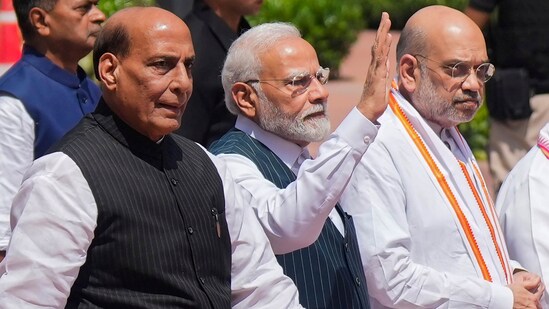
Earlier this week, Prime Minister Narendra Modi addressed both Houses of Parliament, cautioning that the consequences of the ongoing Iran-Israel-US conflict could be long-lasting. He urged citizens to remain prepared for emerging challenges, emphasizing that global instability may affect India’s economy and security. His statements underline the seriousness with which the government is viewing the unfolding crisis.
Strategic Measures to Safeguard Economy
To mitigate the potential fallout, the government has constituted seven empowered groups tasked with addressing critical sectors such as fuel supply, logistics chains, and fertiliser availability. These proactive steps aim to cushion India against disruptions caused by the conflict, particularly in energy imports and trade routes. As tensions in West Asia continue to rise, India’s coordinated political and economic response will be crucial in maintaining stability.