Supermoon 2026: When and Where to Watch
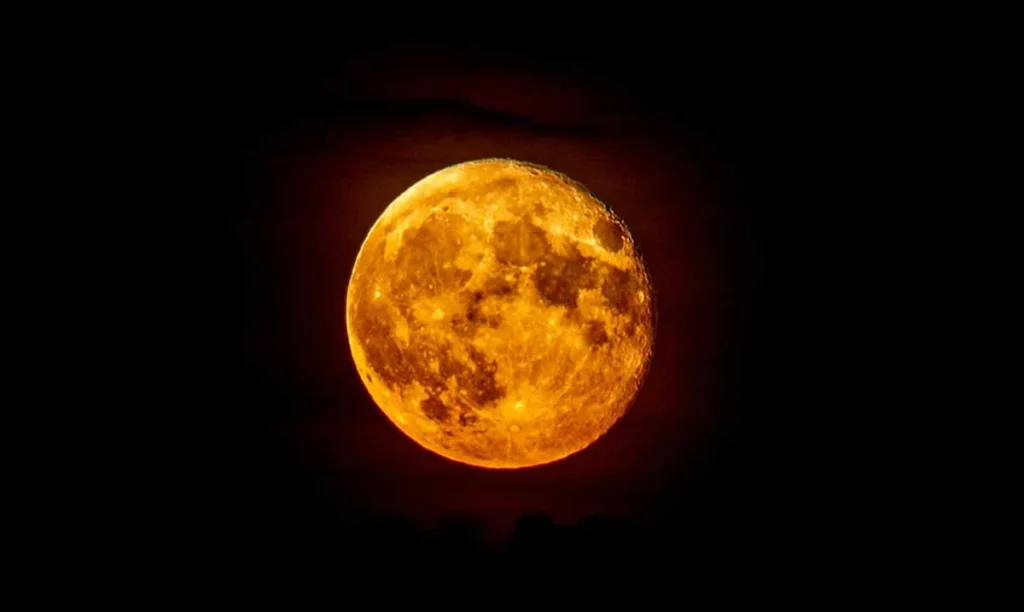
The first supermoon of 2026 will brighten the evening sky on January 3. Skywatchers across India can enjoy a stunning view. Also, this Moon, known as the Wolf Moon, will shine about 30% brighter and appear roughly 14% larger than the farthest full Moon of the year. As a result, it promises a spectacular sight. Near the horizon, the Moon will glow orange-yellow because moonlight passes through a thicker layer of Earth’s atmosphere. At its closest point, the Moon will be 362,641 km from Earth, making it one of the year’s most impressive lunar events.
Best Time to Spot the Wolf Moon
This supermoon concludes a four-month series that began in October. In India, the Moon rises between 5:45 pm and 6 pm IST, at full phase near perigee. Meanwhile, the global peak times vary. For example, New York will see it at 5:30 am EST, London at 10:03 am GMT, Tokyo at 7:30 pm local time, and Sydney at 9:03 pm. Therefore, early evening in India offers the most dramatic and photogenic views. Furthermore, the moon illusion makes the Moon appear larger near the horizon, enhancing its visual appeal.
Viewing Tips for Skywatchers
January’s full Moon is called the Wolf Moon, named after folklore of wolves howling during winter nights. In addition, some cultures call it the Moon after Yule. You can enjoy the supermoon with the naked eye. However, binoculars or a small telescope reveal lunar craters and finer details. A supermoon occurs when the full Moon aligns closely with perigee, the point in its orbit nearest Earth. As a result, tonight’s alignment makes it one of the year’s most impressive lunar events.
Impact Beyond Its Beauty
The supermoon can slightly affect Earth’s tides. For example, its stronger gravitational pull can cause slightly higher tides in oceans. Not all supermoons appear this close to Earth, which means tonight’s event is especially remarkable. In addition, the next supermoon is not expected until the end of 2026. Therefore, skywatchers in India have a rare opportunity to witness one of the year’s most memorable astronomical displays. Overall, this early-evening Moon will light up the sky and create an unforgettable experience for viewers.