Historic Vote After Hasina’s Ouster
Bangladesh will hold its first general election on February 12 since the student-led uprising removed former Prime Minister Sheikh Hasina in August 2024. As a result, the vote marks a major moment in the country’s democratic transition. Moreover, citizens will elect representatives for 300 parliamentary seats. In addition, voters will take part in a referendum on the July National Charter.
Currently, more than 127 million people can cast their ballots. Meanwhile, around 500 international observers will monitor the process. Furthermore, the government expects strong voter participation. Therefore, political parties have launched large-scale campaigns across the country.
BNP and Jamaat Lead the Race
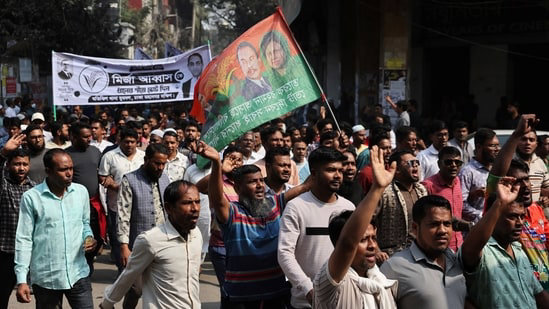
Nearly 1,700 candidates from over 50 political parties and independent groups are contesting the election. Notably, the Bangladesh Nationalist Party has fielded the highest number of candidates, with 288 nominees. Similarly, Jamaat-e-Islami follows with 224 candidates. At the same time, Islami Andolan Bangladesh has nominated 253 contenders.
Meanwhile, BNP leader Tarique Rahman has emerged as a central figure in the campaign. After returning to Bangladesh following 17 years in exile, he began active campaigning. Consequently, he is contesting from the Dhaka-17 constituency. Therefore, the party hopes to regain power after boycotting earlier elections.
Awami League’s Absence Shapes Contest
The former ruling Awami League remains banned from electoral politics. Previously, the interim government suspended the party’s registration in 2025 due to legal and security concerns. Subsequently, in November 2025, the International Crimes Tribunal convicted Sheikh Hasina in absentia.
However, political observers say the party still influences the polls. In fact, many former Awami League leaders are contesting as independent candidates. As a result, they aim to retain their voter base and political networks. Therefore, this strategy keeps the party indirectly active in the election.
Key Leaders and Electoral Challenges
Several senior leaders are contesting key seats. For example, BNP Secretary General Mirza Fakhrul Islam Alamgir is running from Thakurgaon-1. Likewise, Jamaat chief Shafiqur Rahman and leader Mia Golam Porwar have also filed nominations. Additionally, Jatiya Party leader GM Quader is contesting from Rangpur-3.
Meanwhile, Nobel laureate Muhammad Yunus leads the interim government. Importantly, he has promised free and fair elections. However, concerns remain over recent violence and attacks on journalists. Therefore, authorities have increased security to prevent disruptions. Ultimately, the February 12 vote is expected to define Bangladesh’s political future.
Historic Vote After Hasina’s Ouster
Bangladesh will hold its first general election on February 12 since the student-led uprising removed former Prime Minister Sheikh Hasina in August 2024. The vote marks a major moment in the country’s democratic transition. Citizens will elect representatives for 300 parliamentary seats. Voters will also take part in a referendum on the July National Charter.
More than 127 million people can cast their ballots. Around 500 international observers will monitor the process. The government expects strong voter participation. Political parties have launched large-scale campaigns across the country.
BNP and Jamaat Lead the Race
Nearly 1,700 candidates from over 50 political parties and independent groups are contesting the election. The Bangladesh Nationalist Party has fielded the highest number of candidates, with 288 nominees. Jamaat-e-Islami follows with 224 candidates. Islami Andolan Bangladesh has nominated 253 contenders.
BNP leader Tarique Rahman has emerged as a central figure in the campaign. He returned to Bangladesh after 17 years in exile. He is contesting from the Dhaka-17 constituency. The party hopes to regain power after boycotting earlier elections.
Awami League’s Absence Shapes Contest
The former ruling Awami League remains banned from electoral politics. The interim government suspended the party’s registration in 2025 due to legal and security concerns. In November 2025, the International Crimes Tribunal convicted Sheikh Hasina in absentia.
Despite the ban, political observers say the party still influences the polls. Many former Awami League leaders are contesting as independent candidates. They aim to retain their voter base and political networks. This strategy keeps the party indirectly active in the election.
Key Leaders and Electoral Challenges
Several senior leaders are contesting key seats. BNP Secretary General Mirza Fakhrul Islam Alamgir is running from Thakurgaon-1. Jamaat chief Shafiqur Rahman and leader Mia Golam Porwar have also filed nominations. Jatiya Party leader GM Quader is contesting from Rangpur-3.
Nobel laureate Muhammad Yunus leads the interim government. He has promised free and fair elections. However, concerns remain over recent violence and attacks on journalists. Authorities have increased security to prevent disruptions. The February 12 vote is expected to define Bangladesh’s political future.