Voting Begins in Historic General Election
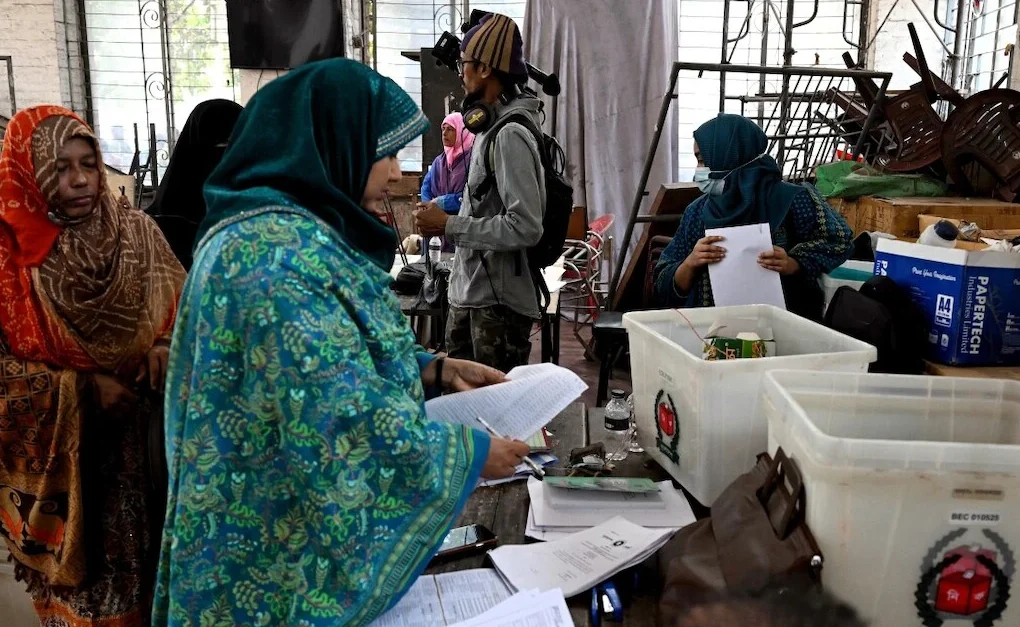
Bangladesh began voting on Wednesday in a high-stakes general election that many see as a major test of democracy. Polling started at 7 am IST and will continue until 4:30 pm. This is the first national election since former Prime Minister Sheikh Hasina was removed from power. Her party, the Awami League, is not contesting after losing its registration.
More than 127 million voters are eligible to cast ballots across the country. Nearly 1,981 candidates are competing for parliamentary seats. The interim government, led by Nobel Peace Prize winner Muhammad Yunus, is supervising the process. It has promised free, fair, and peaceful elections. Security forces remain on alert to ensure smooth voting.
Main Political Parties and Key Contenders
For decades, two major families have dominated Bangladesh politics. Sheikh Hasina and Khaleda Zia led rival camps for years. However, Hasina’s party now stands excluded from the polls. As a result, the Bangladesh Nationalist Party has emerged as the leading contender.
The BNP has projected Tarique Rahman as its main face. He returned from exile in December after 17 years abroad. Rahman has promised judicial reforms, economic revival, and stronger democratic institutions. Meanwhile, an 11-party alliance led by Jamaat-e-Islami has also entered the race. This bloc includes the National Citizen Party, formed by young activists after the 2024 uprising.
Gen Z Influence and Youth-Led Politics
This election marks a turning point for young voters. Generation Z makes up nearly one-fourth of the electorate. Many of them played a key role in protests that led to Hasina’s removal. Now, they want political change through ballots instead of street movements.
The National Citizen Party represents this youth movement. Although it failed to gain wide support alone, it joined hands with Jamaat-e-Islami to strengthen its position. Political analysts say young voters could decide several close contests. Nearly five million first-time voters are also participating, adding to the election’s importance.
Key Issues and Future of Democracy
Several major concerns dominate voter discussions. Corruption remains the biggest worry, according to recent surveys. Inflation has crossed 8.5 percent, increasing pressure on household budgets. Economic recovery and job creation also remain critical, especially for the young population.
Sheikh Hasina, speaking from exile in India, criticised the polls. She warned that excluding her party could weaken democratic legitimacy. At the same time, voters will also decide on proposed political reforms. These include limits on prime ministerial terms and stronger checks on executive power.
The election outcome will shape Bangladesh’s political future. It will show whether the country canstrengthen democratic institutions. It will also reveal if youth movements can create lasting change.