From Mumbai Monopoly to a Wider Battlefield
For decades, the Ranji Trophy revolved around a few dominant names. Mumbai, with a record 42 titles and a historic streak of 15 consecutive championships, set the gold standard for domestic supremacy. Karnataka, Delhi and Tamil Nadu frequently shaped the knockout stages, reinforcing the idea that India’s red-ball power lay in traditional centres. That legacy still defines the tournament’s identity. However, the modern Ranji landscape tells a broader story — one where dominance is harder to sustain and challengers emerge from across the map.
Modern Numbers Show Reduced Concentration
The statistics underline this structural shift. Across 25 completed editions between 2000-01 and 2025-26 (excluding the cancelled 2020-21 season), the tournament produced 12 different champions and 17 different finalists. The change becomes sharper in the last decade. From 2015-16 to 2025-26, six different teams lifted the trophy and 10 reached the final. That spread signals reduced concentration at the top. Importantly, legacy teams remain competitive, but they no longer control the endgame as consistently as before. Instead, a deeper competitive ecosystem now defines the tournament.
Breakthrough Titles Redefine the Map
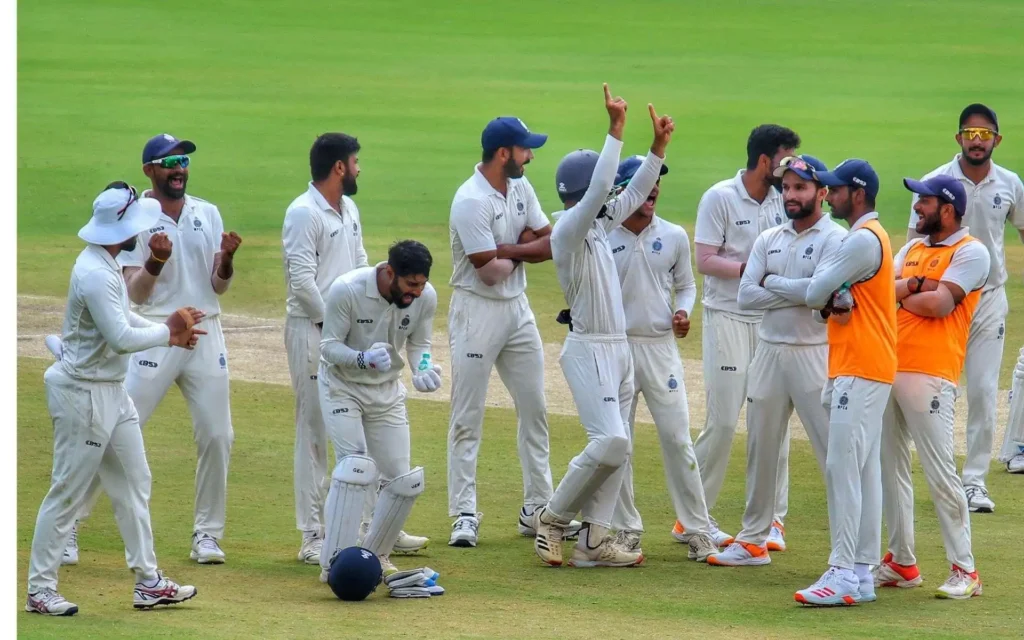
The breakthrough years confirm that this is not a coincidence. Gujarat won their first title in 2016-17. Vidarbha followed in 2017-18, Saurashtra in 2019-20, Madhya Pradesh in 2021-22, and Jammu & Kashmir in 2025-26. Kerala also reached their maiden final in 2024-25. These milestones highlight sustained squad-building rather than one-off upsets. The 2025-26 triumph by Jammu & Kashmir stands out as a powerful marker of how far the competitive field has expanded. New centres are no longer participants; they are contenders capable of winning it all.
Semi-Final Diversity Signals Deeper Strength
Semi-final diversity provides the strongest evidence of structural change. Over the last five completed seasons, the semi-final lineup included Madhya Pradesh, Bengal, Mumbai, Uttar Pradesh, Karnataka, Saurashtra, Vidarbha, Tamil Nadu, Kerala, Gujarat, Uttarakhand and Jammu & Kashmir. Notably, the 2025-26 semi-finals featured established heavyweights alongside first-time entrants Uttarakhand and Jammu & Kashmir. That mix reflects a healthier domestic ecosystem. In short, the Ranji Trophy now mirrors a broader national talent base. The old power centres still matter, but they no longer dominate uncontested. Indian cricket’s red-ball strength has spread, and the title race proves it.