BNP Takes Early Lead in Key Constituencies
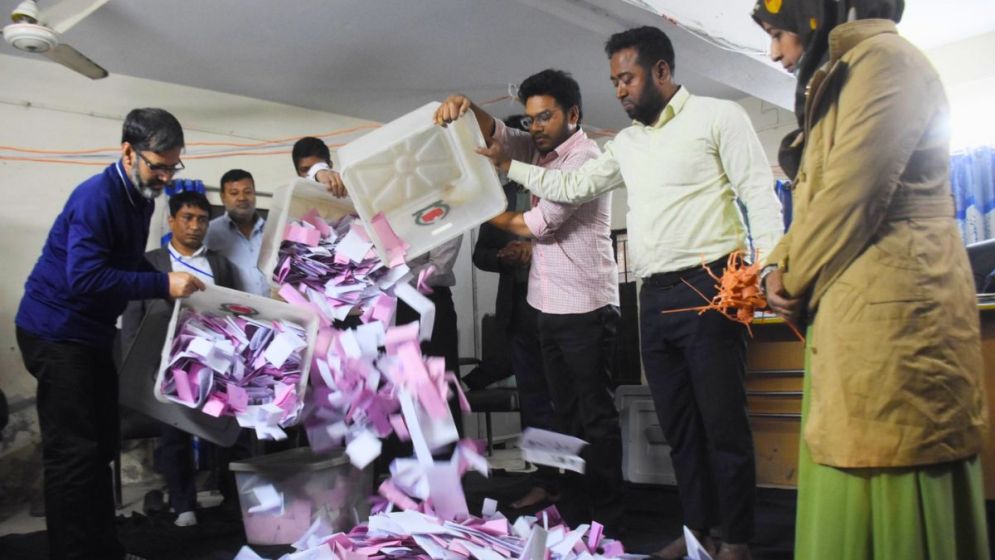
Bangladesh Nationalist Party recorded strong early gains in the Bangladesh general elections as officials continued counting votes on Friday. According to local media, party leaders secured important seats in Dhaka and Bogra. Meanwhile, reports said the BNP led in more than 175 constituencies. As a result, the party moved closer to a simple majority in the 300-member Jatiya Sangsad. At the same time, Bangladesh Jamaat-e-Islami maintained leads in nearly 30 seats. Notably, election officials confirmed that voting ended peacefully. Furthermore, they recorded a turnout of about 48 percent by the afternoon.
Interim Government and Referendum in Focus
Meanwhile, the interim government, led by Nobel laureate Muhammad Yunus, supervised the election process. From the start, the administration promised transparent and fair polls. In addition, citizens took part in a national referendum on the July National Charter. For this purpose, voters used separate white and pink ballots. At the same time, more than 127 million people qualified to vote nationwide. Moreover, nearly 2,000 candidates contested seats in Parliament. Because of these factors, observers described the election as one of the most closely watched in recent years.
Sheikh Hasina Calls Polls a ‘Farce’
However, former prime minister Sheikh Hasina, now living in exile in India, strongly criticised the elections. In a statement, the Awami League shared her allegations online. Specifically, she accused authorities of vote-buying and booth capturing. Furthermore, she claimed officials restricted her party unfairly. As a result, she argued that the ban weakened democratic values. Nevertheless, election officials rejected these allegations. Instead, they insisted that authorities followed legal and constitutional procedures.
Political Rivals and Youth Vote Shape Outcome
Historically, Bangladesh’s politics has centred on rivalry between Hasina and former prime minister Khaleda Zia. Now, with the Awami League absent, the BNP, led by Tarique Rahman, has emerged as the main challenger. At the same time, the party faces competition from a coalition that includes Jamaat and the youth-led National Citizen Party. According to experts at the Centre for Governance Studies, young voters could decide the final outcome. Therefore, analysts believe the results will shape Bangladesh’s political future. Ultimately, the election will test whether protest movements can bring lasting democratic reform.