Chinese Man Extracts Gold From SIM Cards, Sparks Online Frenzy
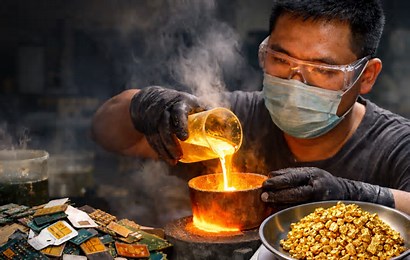
A man in China has grabbed global attention after claiming he extracted 191 grams of gold worth nearly ₹26 lakh from discarded SIM cards and electronic waste. The man, identified as Qiao on social media, shared videos of his work online, which quickly went viral. His experiment triggered curiosity, debate, and safety concerns across Chinese platforms.
Qiao, who hails from Huizhou in Guangdong province, works professionally in precious metal recycling. According to the South China Morning Post, one of his videos crossed five million views, with viewers dubbing him the “Alchemist.” However, Qiao insists his work has nothing to do with alchemy and is purely industrial recycling.
How Gold Is Extracted from SIM Cards and E-Waste
In the viral video, Qiao shows SIM cards soaked in chemical barrels. He then carries out controlled reactions such as corrosion, displacement, and heating. After filtration and high-temperature treatment, the process yields refined gold. Qiao said he processed nearly two tonnes of scrap material to extract 191 grams of gold.
Importantly, the gold did not come only from SIM cards. Qiao clarified that the scrap included telecom chip waste, bank card chips, and communication device contacts. These components often use thin layers of gold for corrosion resistance and signal stability. Experts note that a single SIM card usually contains less than 0.01 grams of gold, making large-scale extraction necessary.
Social Media Calls Him ‘Alchemist’ as Demand Surges
Qiao’s videos sparked a buying frenzy online. Many users rushed to purchase discarded SIM cards and electronic waste from resale platforms. Some netizens expressed regret over previously discarding chip waste. Others praised Qiao’s technical expertise and chemical knowledge.
Comments flooded social media, with users calling his work “professional” and “highly skilled.” However, several experts warned that replicating the process without training could lead to toxic exposure, chemical burns, or legal trouble. Authorities also flagged concerns about unregulated recycling methods.
Qiao Warns Against Imitation, Cites Safety and Legal Risks
Qiao later clarified that he never intended to promote gold extraction as a DIY activity. He said he operates legally with proper certification and follows safety protocols. “My goal was to share my work, not encourage risky experiments,” he stated.
He strongly warned amateurs against attempting similar processes at home. According to Qiao, improper handling of chemicals can cause serious harm and may violate environmental laws. His case highlights both the hidden value in e-waste and the dangers of untrained experimentation.
As e-waste recycling grows worldwide, Qiao’s story shows how technology trash can turn into treasure—when handled responsibly.