Hasina Urges Bangladeshis to Oppose Interim Administration
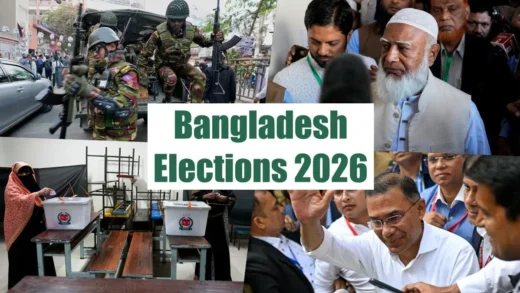
In her first public address from India, exiled former Bangladesh prime minister Sheikh Hasina urged citizens to rise up against the interim government led by Muhammad Yunus. She accused the administration of failing to ensure law and order and of blocking free and fair elections. Speaking days before the February 12 general election, Hasina said the Yunus-led setup lacks legitimacy and cannot deliver democracy. Bangladesh’s Election Commission has barred Hasina’s party, the Awami League, from contesting the polls. Her remarks came as election campaigning officially began in the country.
Appeal for Minority Protection and UN Intervention
Hasina also appealed for an end to violence and disorder across Bangladesh. She demanded an “ironclad guarantee” for the safety of religious minorities, women, and vulnerable communities. Stressing the need for stability, she said unrest had damaged the economy and deepened fear among citizens. The former prime minister further urged the United Nations to conduct a new and impartial investigation into developments following the collapse of her government. She argued that such an inquiry was necessary for reconciliation and justice.

Strong Attack on Muhammad Yunus
The Awami League chief delivered her remarks through a pre-recorded audio message at an event titled “Save Democracy in Bangladesh” at the Foreign Correspondents Club. Hasina launched a scathing attack on Muhammad Yunus, calling him a “corrupt, power-hungry traitor” and accusing him of conspiring to remove her from office. She claimed Bangladesh had entered an “age of terror” after her ouster in August 2024, following student-led protests. Hasina alleged that extremist forces now operate freely and that law enforcement has failed to act.
Claims of Rights Abuses and Political Relevance Push
Hasina accused the interim government of allowing violence, torture, and sexual assault, particularly against women and minorities. She said press freedom had collapsed and alleged that authorities used legal action to silence journalists and political opponents. The former leader also raised five demands, including the removal of the Yunus administration and the restoration of democratic institutions. Political observers view the speech as an effort to keep the Awami League politically relevant, as the BNP and Jamaat-e-Islami are expected to dominate the upcoming election. Despite strong grassroots support, many Awami League leaders remain in exile in India and Europe.