ISRO to Launch PSLV-C62 with Anvesha Satellite in 2026’s First Mission
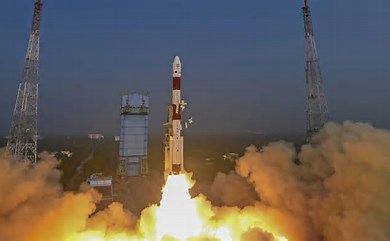
India will kick off its 2026 space calendar with the launch of PSLV-C62, carrying the Anvesha (EOS-N1) Earth observation satellite into orbit from the Satish Dhawan Space Centre in Sriharikota. The countdown began on Sunday afternoon, highlighting a key milestone for India’s trusted launch vehicle. The rocket is scheduled to lift off at 10:17 am on January 12, marking the country’s first space mission of the year. This launch is especially significant following the last PSLV mission in 2025, which was aborted due to a technical observation, making the successful deployment even more important for ISRO.
Main Payload and Co-Passenger Satellites
The 260-tonne PSLV-C62 will place Anvesha into a polar sun-synchronous orbit a few hundred kilometres above Earth. In addition, ISRO will deploy 14 co-passenger satellites, arranged by NewSpace India Limited (NSIL), the agency’s commercial arm. These satellites will launch sequentially, demonstrating ISRO’s reliability and precision. Moreover, the mission highlights India’s growing role in the global satellite launch market. Several of these satellites belong to international clients, which underscores the trust foreign companies place in ISRO’s launch services.
Technology Demonstration and Re-Entry Test
Beyond satellite deployment, the mission will test new technology. About two hours after lift-off, ISRO will restart the fourth stage (PS4) to demonstrate the Kestrel Initial Technology Demonstrator, a 25-kg capsule from a Spanish startup. Both the stage and the capsule will re-enter Earth’s atmosphere and safely splash down in the South Pacific Ocean. This experiment will provide engineers with critical data for future reusable and re-entry technologies, further enhancing India’s space capabilities. The data collected will also help improve safety protocols for upcoming manned and unmanned missions.
PSLV Legacy and Mission Significance
This flight marks the 64th PSLV mission, following its successful deployment of landmark payloads such as Chandrayaan-1, Mangalyaan, and Aditya-L1. Earlier, ISRO successfully launched the BlueBird Block-2 satellite using its LVM3 rocket, placing the heaviest payload in low Earth orbit. With the PSLV-C62 Anvesha launch, ISRO reinforces its reputation as a reliable and cost-effective space agency, while setting a strong start for India’s ambitious 2026 space agenda. The mission also showcases India’s growing capabilities in handling multi-satellite launches efficiently, strengthening its position in the global space sector.
— Zoom Chronicle Newsews