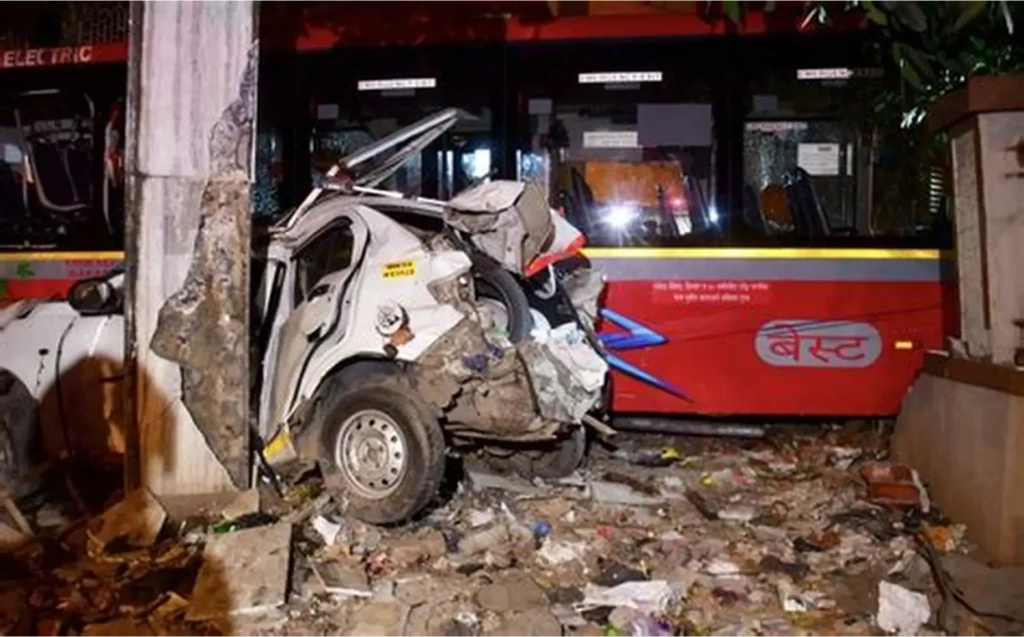
The Mumbai BEST bus accident near Bhandup station claimed four lives and injured nine others late Monday night. The bus reversed unexpectedly at around 10:03 pm, striking passengers waiting near the station exit. Panic spread among commuters, causing further injuries. Emergency teams, including police, fire brigade, and ambulances, quickly reached the scene and transported the injured to nearby hospitals. This tragic incident has renewed concerns about Mumbai BEST bus safety and commuter protection.
Police Investigate Bhandup Bus Crash
Police detained 52-year-old driver Santosh Ramesh Sawant for questioning following the Mumbai BEST bus accident. He was driving a Wetlease Olectra midi bus on route A-606 from the Vikhroli depot. Officials noted the bus has a limited turning radius, increasing the risk of reversing accidents in crowded lanes. Investigators are reviewing the vehicle’s mechanical condition, road layout, and the driver’s actions. Conductor Bhagwan Bhau Ghare was also inside the bus during the incident.
Government Response and Political Reactions
Chief Minister Devendra Fadnavis announced ₹5 lakh compensation for each family affected by the Mumbai bus accident and promised strict action once the probe concludes. Congress leader Varsha Gaikwad demanded a full inquiry, criticizing BEST’s wet-leasing model. She argued that policy decisions weakened Mumbai’s public transport system, putting commuters at higher risk and reigniting debates about fleet safety.
Safety Measures and Lessons for Mumbai Commuters
Following the Mumbai BEST bus accident, authorities examined CCTV footage to reconstruct the events. Traffic slowed for hours while rescue teams cleared the area. Commuters raised concerns about driver training, reversing practices, and wet-leased bus deployment in narrow lanes. Experts recommend better route planning, regular inspections, and stricter oversight of Mumbai’s bus network. The incident highlights the urgent need for long-term safety reforms in public transport.