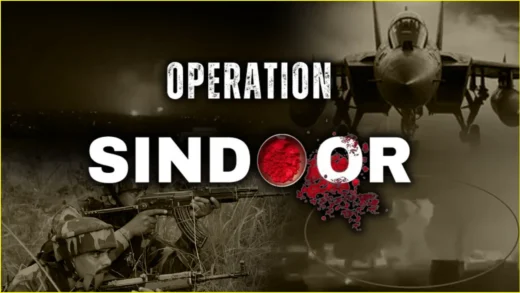
During Operation Sindoor, the Indian Navy was placed on high alert, with warships and submarines assigned specific target packages for potential missile strikes inside Pakistan. According to NDTV sources, the Navy was prepared to launch BrahMos supersonic cruise missiles and Klub-class submarine-launched cruise missiles against Pakistan Navy ships, submarines in harbour, and strategic land-based targets. Although all assets were in position and on hot-standby, the final order to launch was never issued. Had it gone through, it would have marked a major escalation in the military confrontation.
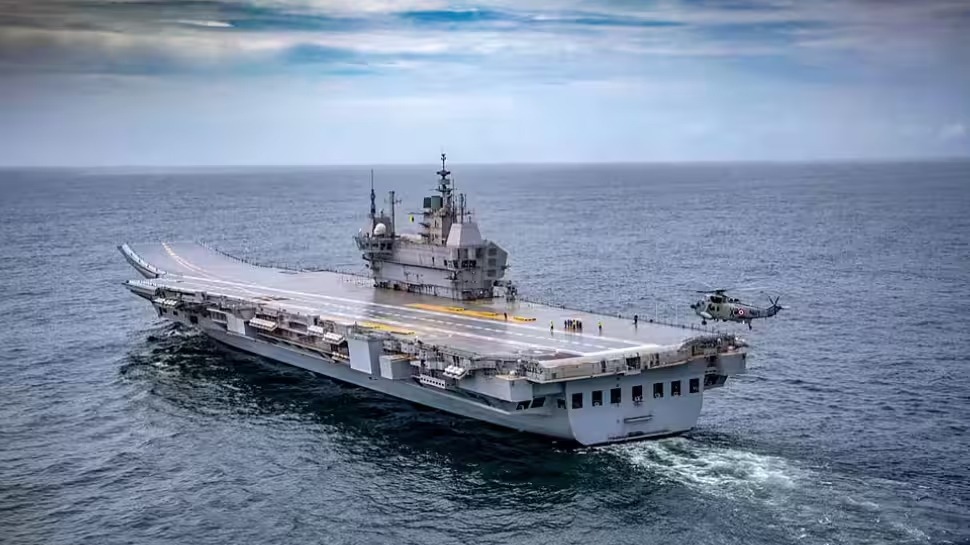
NDTV reports that Pakistani Navy warships, including key assets like frigates and corvettes, remained confined to Karachi harbour throughout the standoff. Indian naval superiority—highlighted by the INS Vikrant-led carrier battle group and MiG-29K fighter jets—ensured aerial and maritime dominance in the North Arabian Sea, deterring Pakistani air and naval activity. Even though the Navy refrained from direct ship-launched attacks, land-based naval weapons were reportedly used to strike terrorist infrastructure inside Pakistan, though the specific systems employed remain undisclosed.
Operation Sindoor, conducted between May 6–7, 2025, was a joint military retaliation targeting at least nine terrorist sites in Pakistan, following the April 22 Pahalgam terror attack, where 26 civilians were killed. A few days after hostilities ceased, an attempt by a Pakistan Navy RAS-72 Sea Eagle surveillance aircraft to operate near Indian waters was swiftly countered. INS Vikrant’s MiG-29K jets intercepted and closed in on the aircraft within a few hundred metres, forcing it to retreat to the coast. The incident underscores the operational readiness and deterrence posture maintained by the Indian Navy throughout the conflict.